
Purity & Quality
Pure Kesar. Nothing Less.
From careful selection to thoughtful handling, every Kasmirana strand is chosen to preserve the natural character of authentic saffron.
Discover the Kasmirana Standard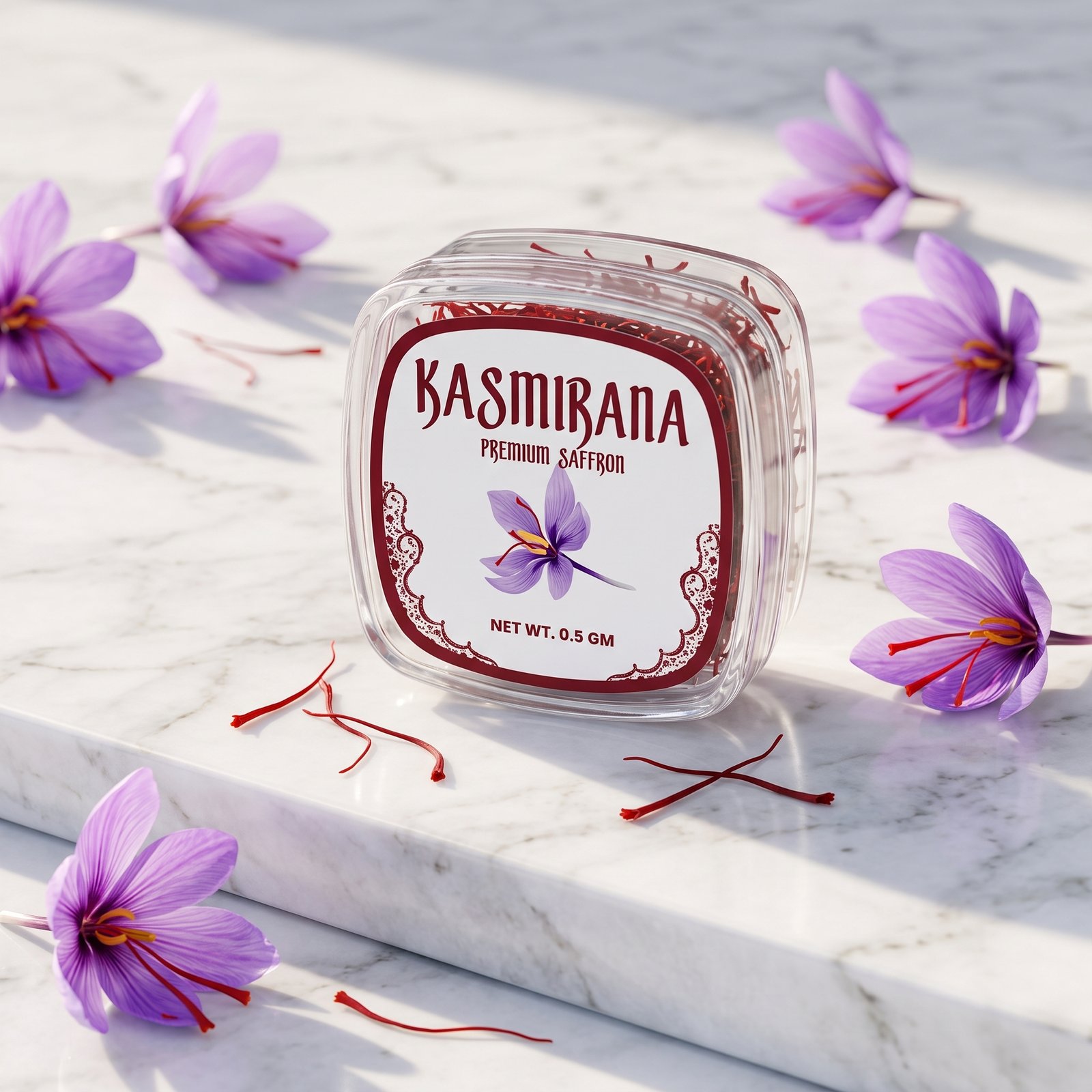
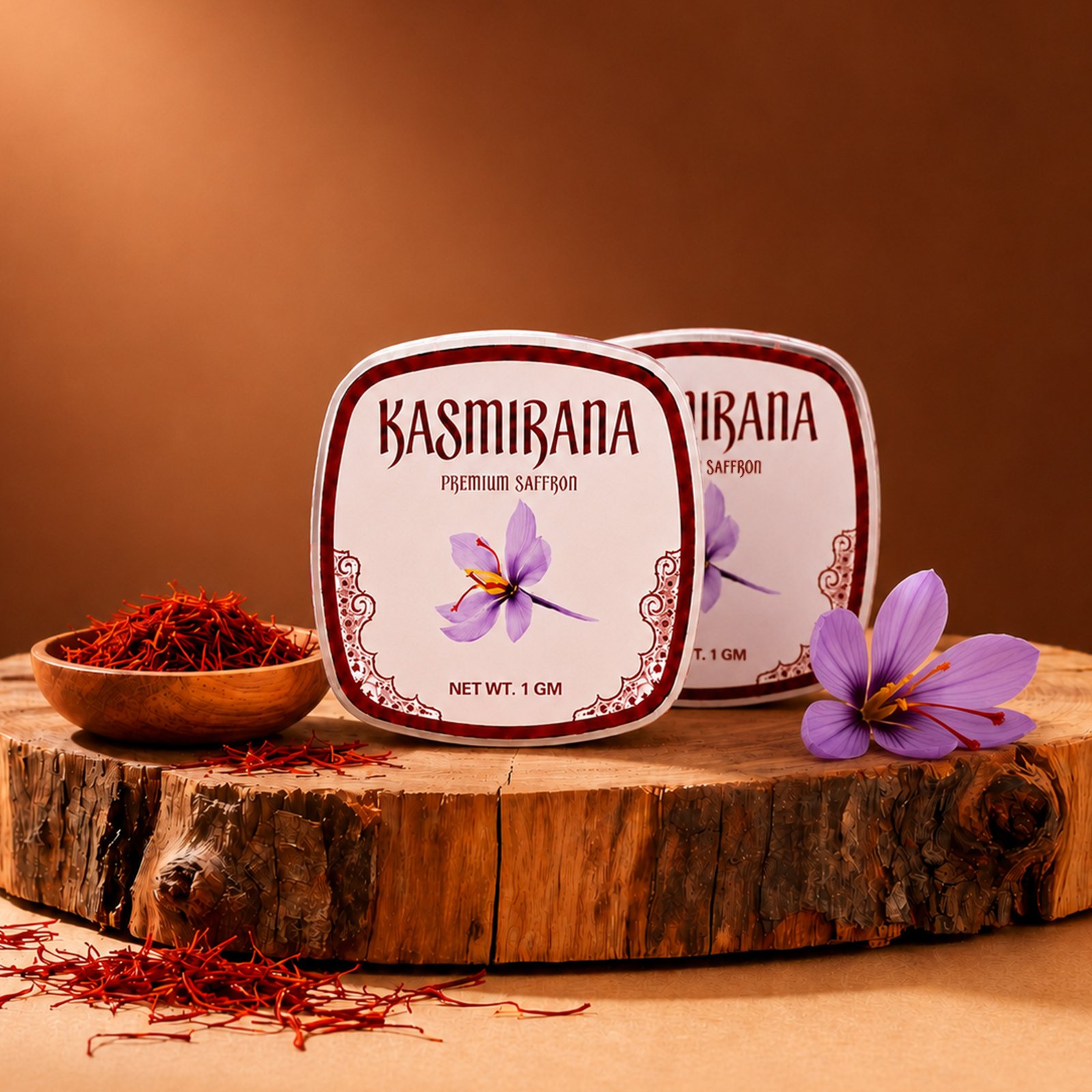
Where Quality Begins
Purity Begins with Selection
Long before a single thread is packaged, its quality has already been decided. It begins with careful sourcing and an unhurried eye for what genuine saffron should look, smell and feel like.
We pay close attention to appearance, natural aroma and thread quality — favouring strands that are clean, intact and free of unwanted material. It is a quieter, more deliberate way of working, but it is the only way we know how to protect what makes Kesar precious.
Careful handling continues at every step that follows, so that what reaches you still carries the character it started with.
The Kasmirana Standard
What We Look For in Every Thread
Four simple characteristics guide the way we look at saffron, thread by thread.
Colour
Natural colour and appearance are important characteristics when assessing saffron.
Aroma
Authentic saffron has a distinctive natural fragrance and character.
Thread Quality
Careful attention is given to the appearance, structure and condition of the saffron threads.
Cleanliness
Saffron should be clean and carefully handled, without unwanted material.
From Source to Kesar
A Careful Journey
Carefully sourced saffron.
Quality threads are selected with attention to their natural characteristics.
The saffron is carefully looked over before packaging.
Thoughtful handling and packaging help protect its natural character.
Purity Check
Real Saffron vs. Fake Saffron
Know the Difference.
These observations may help identify warning signs, but they are not a definitive authenticity test.
Natural Characteristics
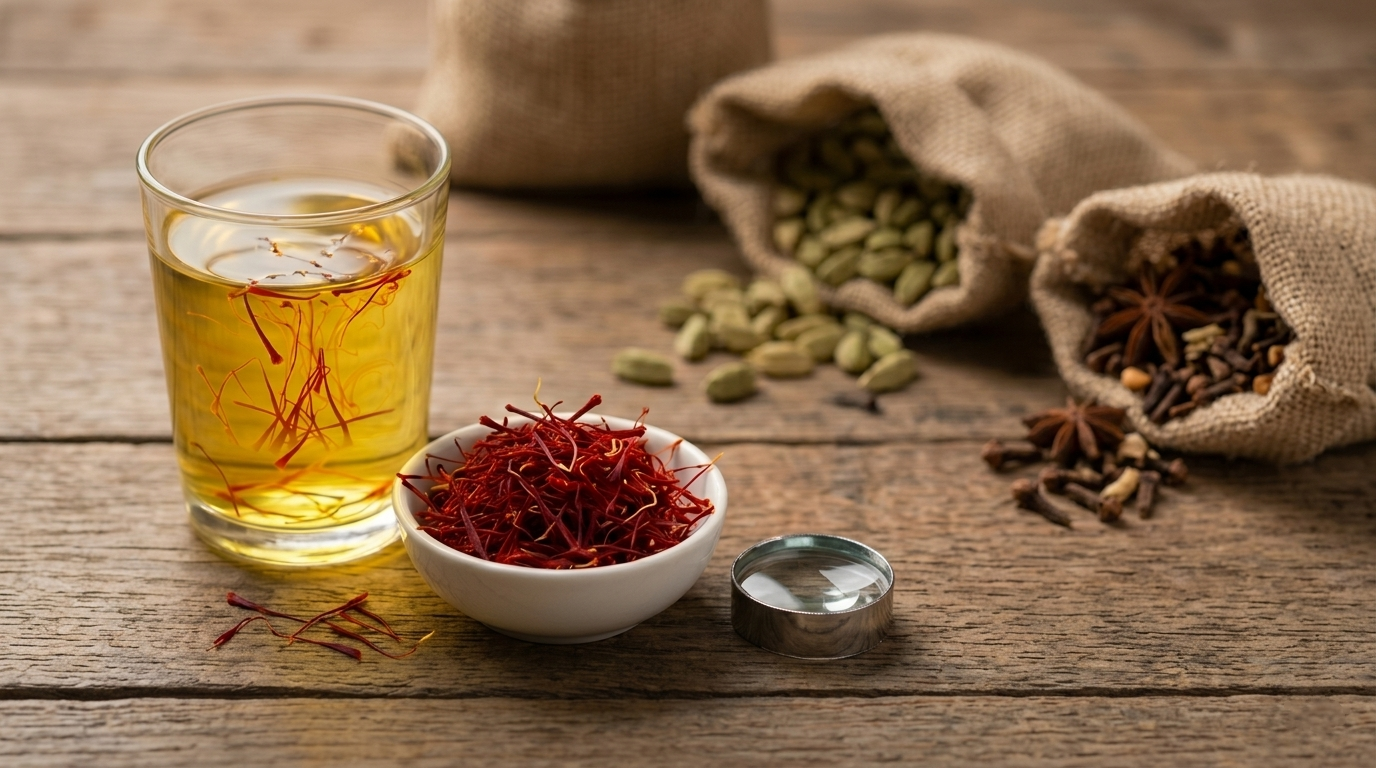
- ✓ Natural-looking red saffron threads
- ✓ Distinctive natural aroma
- ✓ Colour releases gradually
- ✓ Threads retain their natural structure
- ✓ Appearance is not artificially bright or dyed
Warning Signs
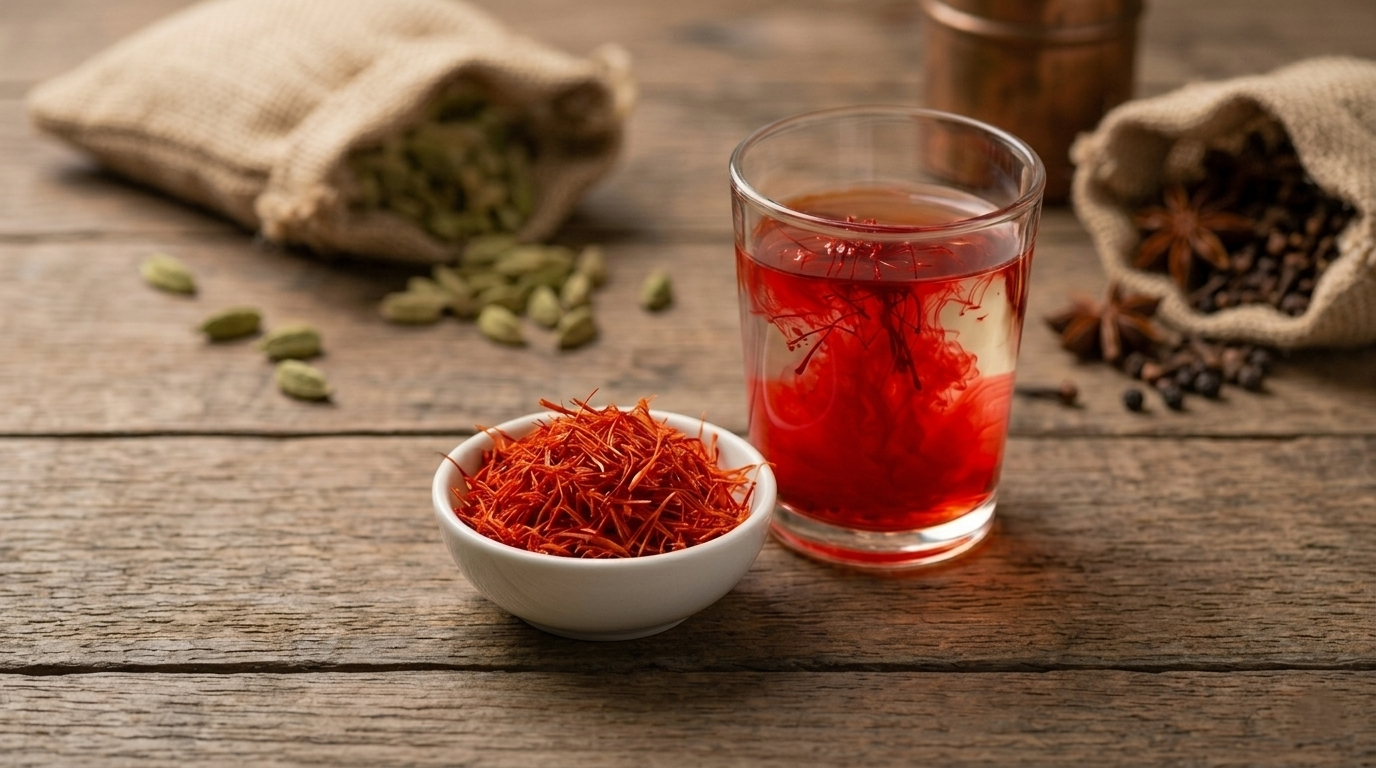
- ! Unnaturally uniform or overly bright appearance
- ! Suspiciously fast colour release
- ! Artificial-looking colour
- ! Unusual appearance or smell
- ! Threads that appear unlike natural saffron
These are general observations, not a certification test. When in doubt, rely on a trusted source and professional testing.
A Simple Observation
Test Your Saffron at Home
Simple observations can help you understand the natural characteristics of saffron. They can offer useful clues, but they should not be considered a substitute for professional authentication.
The Water Test
Drop 2-3 threads into a glass of lukewarm water and wait about 15 minutes. Genuine saffron slowly releases a golden-yellow colour; a very sudden, instant flood of red or orange colour is worth questioning.
The Touch Test
Rub a thread gently between wet fingers. Genuine saffron tends to stain the skin golden-yellow while the thread stays largely intact, rather than dissolving into a paste.
The Smell Test
Real Kashmiri saffron carries a distinctive sweet, earthy fragrance, often compared to honey mixed with fresh hay. A chemical smell, or no scent at all, can be a warning sign.
The Flame Test
Held briefly near a flame, genuine saffron tends to darken slowly and release a pleasant aroma, rather than catching fire and burning quickly.
Safety note: only attempt the flame test in a well-ventilated area, away from anything flammable, using a lit candle or lighter held at a safe distance — never hold the thread directly in the flame for more than a second or two.
A home observation can offer useful clues, but it cannot replace professional authentication or laboratory analysis.
Natural Character
Colour. Aroma. Character.
Three natural qualities are closely associated with what makes saffron distinctive.
Crocin
Colour
The natural compound associated with saffron's characteristic colour.
Safranal
Aroma
Closely associated with the distinctive aroma of saffron.
Picrocrocin
Flavour
Associated with saffron's characteristic flavour.
Handling & Preservation
Protecting What Nature Gives Us
Saffron is delicate by nature. Thoughtful storage helps it hold on to its colour, aroma and character for longer.
Light
Protect saffron from direct light.
Moisture
Keep it dry.
Care
Handle and store thoughtfully.
Kashmiri Heritage
Rooted in Kashmir. Chosen with Care.
Saffron carries centuries of history in the valleys of Kashmir, where it has long held a place of quiet cultural and culinary significance. Kasmirana's approach honours that heritage — treating each strand with the care and respect this ingredient has always deserved.
Our Promise
Selected with Care. Preserved with Purpose.
Kasmirana's approach to quality begins with respect for the ingredient itself — selecting saffron carefully, handling it thoughtfully and preserving the natural character that makes Kesar so precious.
Questions
Frequently Asked
Kasmirana
Experience the Character of Pure Kesar
Discover carefully selected saffron inspired by the richness, heritage and character of Kashmir.
Shop Kasmirana Kesar